Monday, May 5, 2014

Pu'uhonua O Hōnaunau National Historical Park


Our February 2014 tour of Hawai'i Island included a stop at Pu'uhonua O Hōnaunau National Historical Park.  Situated on the shores of Hōnauna Bay, this 182 acre park preserves and interprets ancient Hawaiian archeological and cultural sites.  With a fresh water source and a sheltered cove, this was an obvious location for the ali'i (royal chiefs) to take up residence.  On the other side of the Great Wall was the pu'uhonua or place of refuge for defeated warriors, noncombatants and those who violated kapu or sacred laws.  The wall was built around 1550 and the site was used until 1819 when Kamehameha II abolished traditional religious practices. Built around 1650, the Hale o Keawe is the newest heiau (temple) and honors the great-grandfather of Kamehameha I.

The visitor center includes a small bookstore, interpretive exhibits, offices and restrooms.  A covered amphitheater nearby is used for ranger talks and demonstrations.


The large, paved parking area often fills up

Open-air visitor center

Artwork in the visitor center

Covered amphitheater

Sandy path over lava rocks

Hale Kū’ai or house for storing, displaying and trading

Hōnauna Bay

Half-sized Hale o Keawe temple model

Wooden Ki'i (image or statue)

Kānoa (bowls carved into the rock)

A tree mold in the lava

Keone'ele cove was used as the royal canoe landing

One end of the Great Wall and Hale o Keawe

Another Ki'i faces the bay

These two ki'i guard the pu'uhonua or place of refuge

More ki'i stand watch over the temple

Inside the pu'uhonua

Rugged coast

The Great Wall was up to 10 feet high and 17 feet thick

According to Mark Twain, the Keōua Stone was the favorite resting place of Keōua, the high chief of Kona

‘Āle’ale’a – once the principal heiau (temple) for the pu’uhonua (place of refuge)

Palm trees grow where sandy soil has been deposited

Ancient lava fields dominate the landscape

A gateway leads out of the pu'uhonua

A fish pond in the royal village

Another fish pond

Outrigger canoe

A $5 entrance fee at Pu'uhonua O Honaunau National Historical Park is valid for seven consecutive days.  Other entrance options include an America the Beautiful Annual Pass for $80 for twelve months or a Senior Pass for a one-time fee of $10 for those age 62 or over.

The park website is http://www.nps.gov/puho/index.htm.

Saturday, May 3, 2014

Ali'i Drive - Kailua Kona


Our February 2014 visit to the Big Island included staying a few days in Kailua Kona.  We spent some time wandering beside the ocean on Ali'i Drive.  The small harbor area near the north end of Ali'i Drive is the start and end points of the Ironman World Championship Triathlon held every October.  This is also the location where waves hit the seawall and daily rain down on the sidewalk and street.  We ate a couple of times at Fish Hopper, an excellent seafood restaurant located just across the street from the bay.  It is in the turquoise and orange building visible in a couple of the pictures and the video.

Hulihe'e Palace was completed in 1838 by the second governor of the Island of Hawai'i, John Adams Kuakini.  It was used by King Kalākaua as a summer residence during part of his reign in the late 1800s.  The Moku'aikaua Church across the street was completed in 1837 on land donated by Royal Governor Kuakini.  A wooden church was established by 1823, but burned a few years later.  Both the palace and the church were damaged by the 2006 earthquake.

A small portion of Kailua Bay

What? No bicycles?

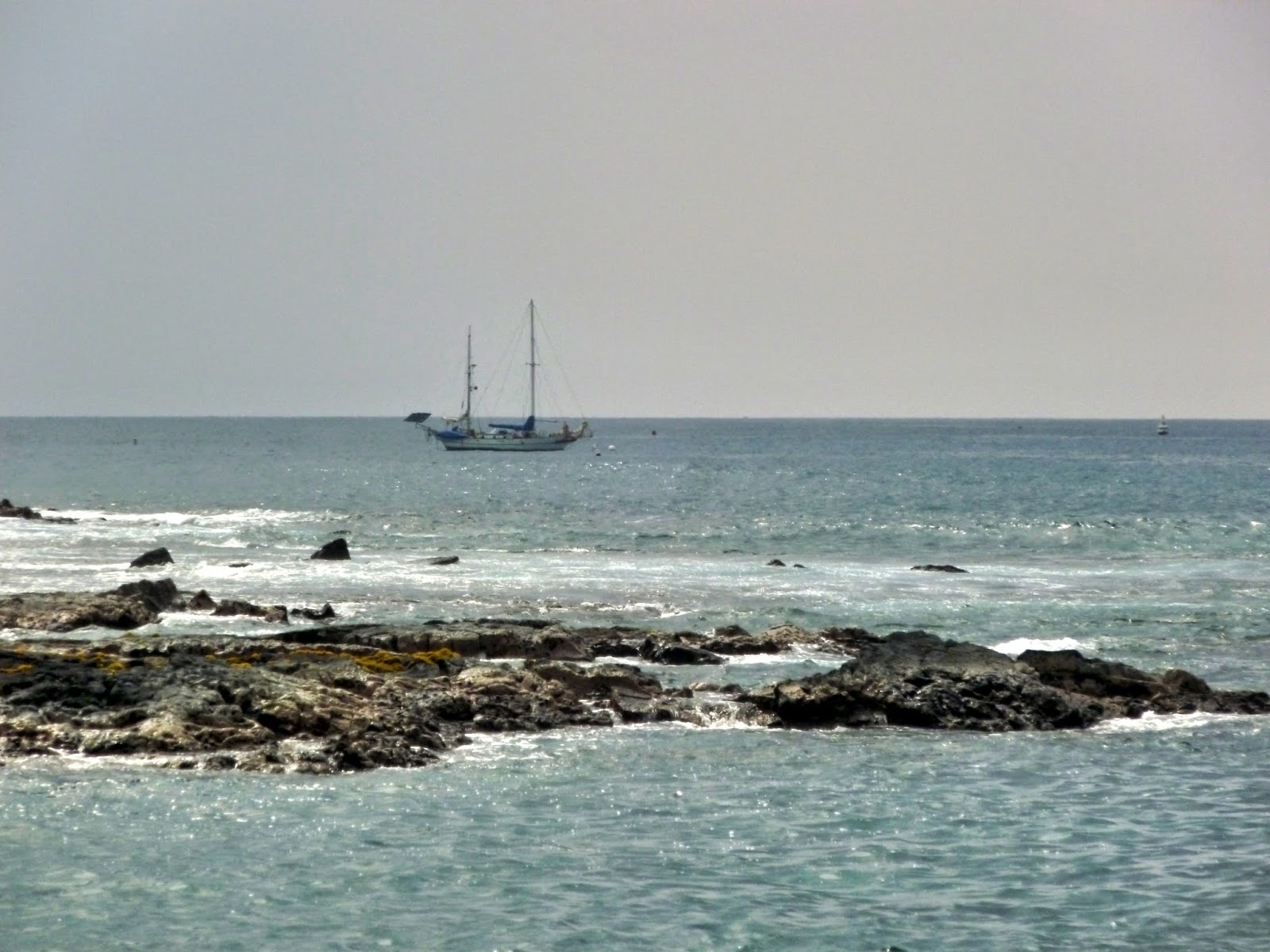
A sailboat at anchor in the bay

Wave crashing onto the Ali'i Drive seawall


The mauka (mountain side) entrance to Hulihe'e Palace

The makai (oceanside) of Hulihe'e Palace

The steeple of the first Christian church in the Hawaiian islands and Hulihe'e Palace

Moku'aikaua Church

This large tree sheltered a whole flock of birds

Restored  1939 Ford truck for my brother-in-law, Chris

The Tourism Authority website is http://www.gohawaii.com/big-island/regions-neighborhoods/kona/historic-kailua-village-kailua-kona.

Thursday, May 1, 2014

Kaloko-Honokōhau National Historical Park


Our first excursion on the Big Island during our February 2014 visit was to Kaloko-Honokōhau National Historical Park.  This 1160 acre park is located about four miles south of the Kona International Airport on the makai or ocean side of Hawaii route 19, Queen Kaʻahumanu Highway.  The park was established in 1978 to preserve, protect and interpret traditional native Hawaiian activities.

The small open-air  Hale Ho'okipa Visitor Contact Station includes an enclosed storage room and restrooms as well as exhibits, a very small bookstore and an area for native volunteers to demonstrate traditional activities.  The Ala Mauka Makai (Mountain-Ocean Trail) meanders 0.7 miles from the contact station to Honokōhau Beach.  Along the way, the trail passes native plants, a fish pond, an animal pen, and ancient rock carvings.

 Hale Ho'okipa Visitor Contact Station

Ala Mauka Makai (Mountain-Ocean Trail)

Native plant in bloom

Ancient ruins and newer lava

Noni plant

The trail passes over solidified lava flows

An old tree struggles to survive in the nearly non-existent soil

Fencing for an animal pen

Ripples solidified in stone

A looping boardwalk preserves teh ancient carvings

Carving of a man

This carving of a man appears upside down along the trail

The papamu (game board) for Kōnane

The trail leads to a beach of  striking contrast: white sand on black lava

A replica Hale ali'i (house of the chiefs)

‘Aī’ōpio (fishtrap)

Lava and sand along the shore

Shallow lagoon

Honokōhau Beach

Green sea turtle in the water

Exposed lava flows

Another sea turtle

Sea turtle 102

Invasive cattle egret

Honokōhau Beach

Green sea turtles on the beach

Entrance to Kaloko-Honokōhau National Historical Park is free.
The park website is http://www.nps.gov/kaho/index.htm.