Showing posts with label Mojave National Preserve. Show all posts

Monday, June 4, 2018

Granite Pass Scenic Vista - Mojave National Preserve


We concluded our March 2018 visit to Mojave National Preserve with a stop at the scenic vista point ¾ mile south side of Granite Pass on Kelbaker Road. This is also 15.1 miles south of Kelso or 7.2 miles north of I-40. An off-road, paved parking area has been constructed to allow visitors to stop and enjoy the rock formations along this ridge of the Granite Mountains.


Teddy bear cholla (Cylindropuntia bigelovii)

Mojave yucca (Yucca schidigera)

Pencil cholla (Cylindropuntia leptocaulis)

Entry to Mojave National Preserve is free.

The preserve website is http://www.nps.gov/moja.

Sunday, June 3, 2018

Kelso Dunes - Mojave National Preserve


On our previous visit to Mojave National Preserve, we hiked to the top of the Kelso Dunes and heard the deep booming sound of the "singing sand" as we slid down the steep slope on our return. We had planned to repeat that experience on our March 2018 visit, but rain forced us back to our vehicle. Many of the dunes are 500' high with the highest reported to be just over 600 feet above the valley floor.

Providence Mountains beyond the dunes

Edgar Peak (center 7162') and Fountain Peak (right 6988') in Providence Mountains from the trail head

Silver Peak (6365') in Granite Mountains

Western summit of Granite Mountains (5876') from the trail head

Trail head

Entering designated wilderness

Trail surface is loose sand

Three people ascending the highest dune (~500' above the valley)

A closer view

Dunes east of the highest dune

Approaching rain signals the end of our adventure

Entry to Mojave National Preserve is free.

The preserve website is http://www.nps.gov/moja.

Saturday, June 2, 2018

Kelso Depot Visitor Center - Mojave National Preserve


During our short visit to Mojave National Preserve in March 2018, we stopped at the visitor center housed in the restored Kelso Depot. Built in 1924 by the Union Pacific Railroad, the depot served meals to many travelers over the 38 years it was operated to serve passengers. The railroad kept the facility open as a bunkhouse and restaurant for its employees until 1985. Plans to demolish the building were halted by local residents and politicians. In 1992, the building was transferred to the Bureau of Land Management as an addition to the East Mojave National Scenic Area. Congress created the Mojave National Preserve in 1994 with title to the depot passing to the National Park Service. Renovation began in 2002 and the building was opened to the public as the visitor center in 2005.

The visitor center has an information desk, gift shop, numerous exhibits on the first and second floors, a multi-purpose room that is usually configured as a theater for showing the 20-minute orientation movie, The Pulse of the Desert. Even though we had seen the movie on our previous visit, we took the time to watch it again. Yes, it's that good. Restrooms with running water are housed in a separate building. Paved parking for about 30 vehicles is provided immediately east of the depot. Three parking spots are designated for handicap placarded vehicles.

Kelso Depot

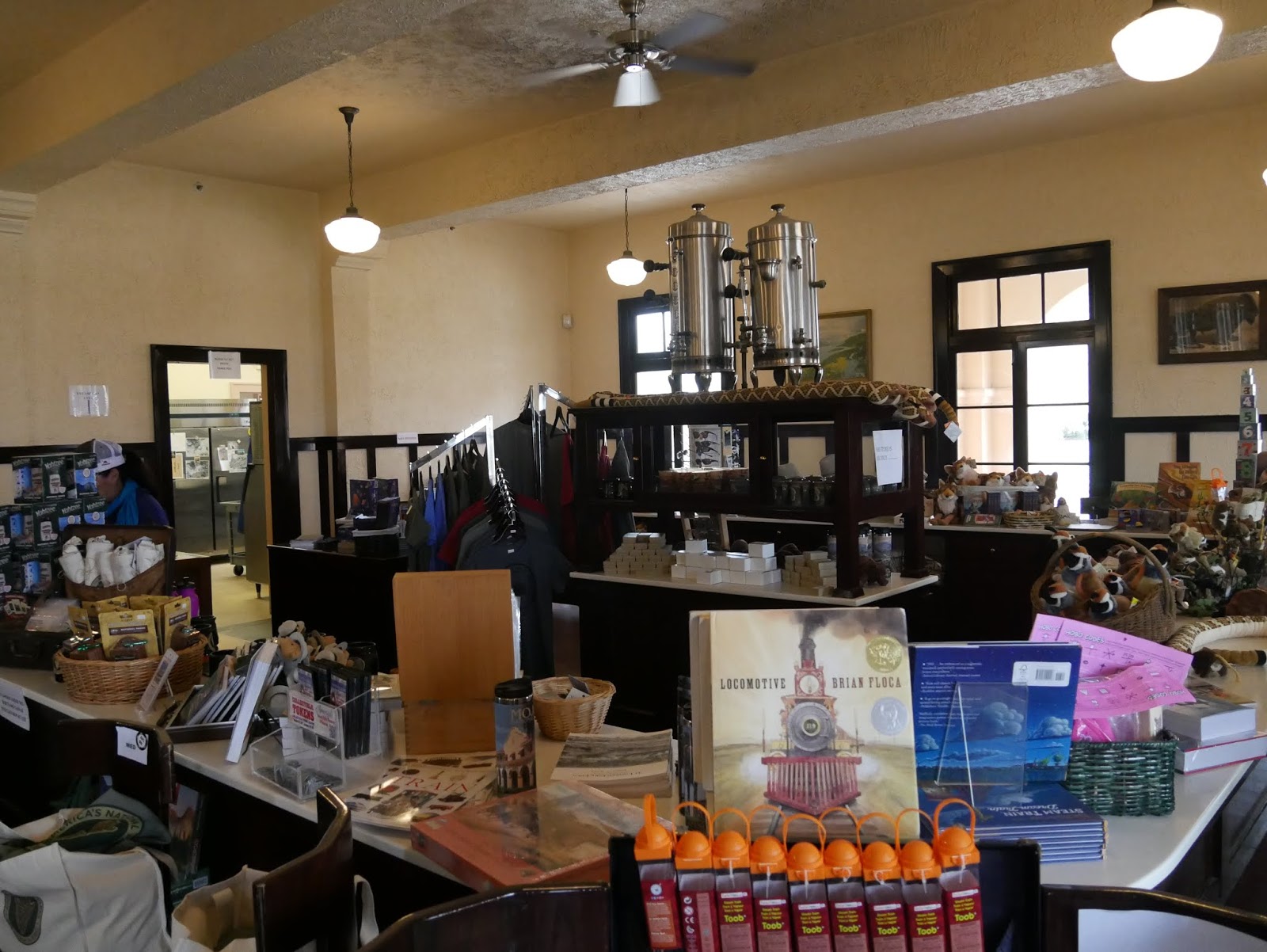
Old lunch counter is now a gift shop

Sunglasses, shirts, and binoculars

Union Pacific and the National Parks

Manual car mover

The Railroad Age

Route 66

4-6-6-4 Challenger steam locomotive model

Alco FA diesel-electric locomotive model

Mining

Ore samples

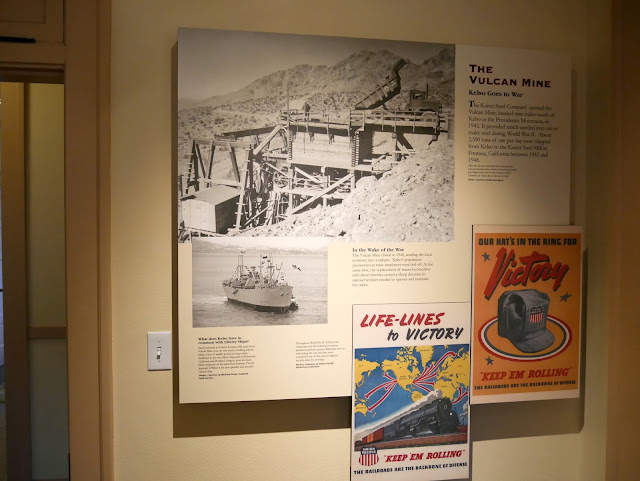
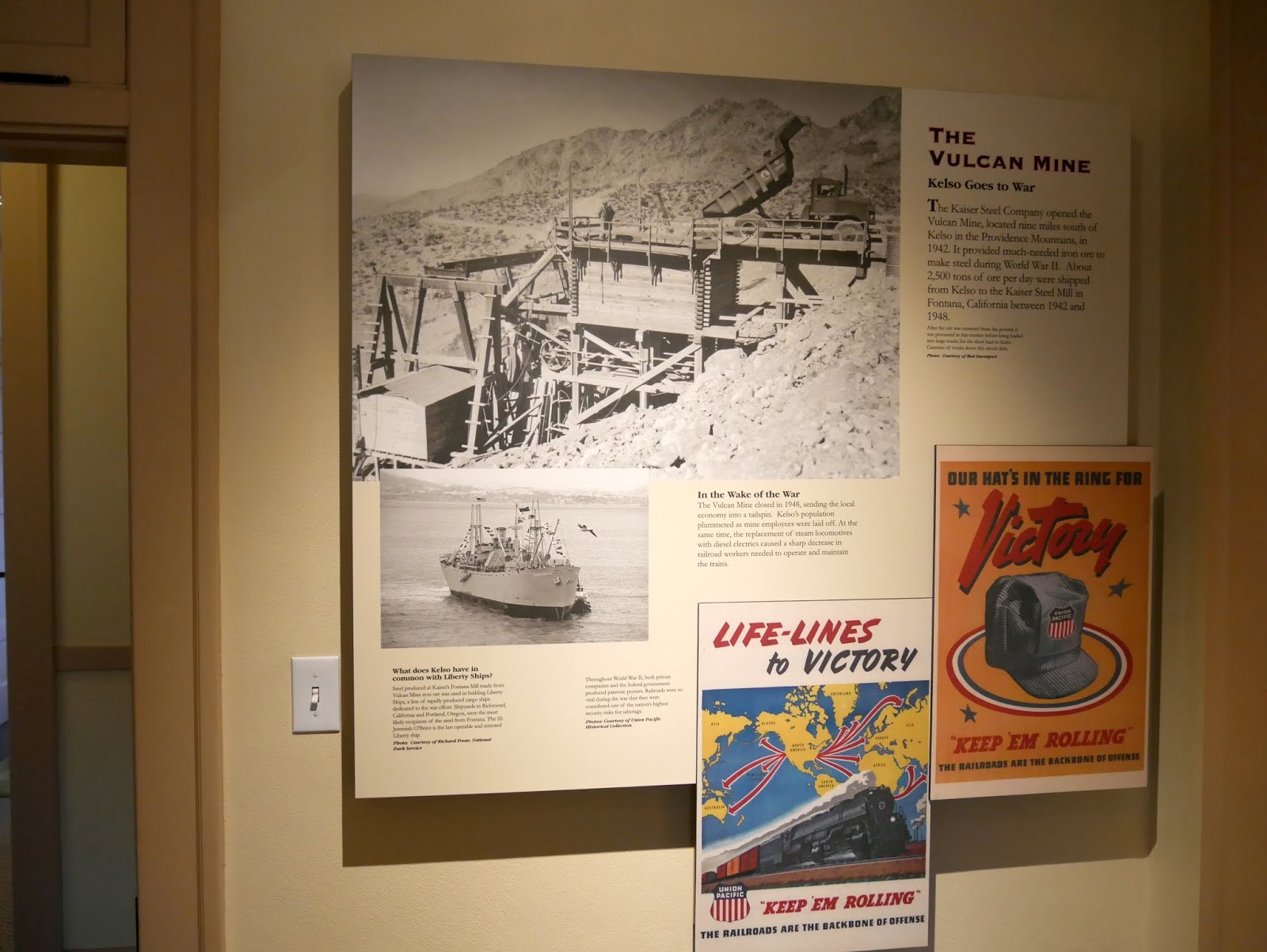
Vulcan mine

Boomtowns

Library on the second floor

Lounge on second floor

Building history

Union Pacific National Park posters

Kelso Dunes

Desert flowers

Entry to Mojave National Preserve is free.

The preserve website is http://www.nps.gov/moja.

Friday, June 1, 2018

Baker to Kelso - Kelbaker Road - Mojave National Preserve


Our March 2018 trip to California continued with a short visit to Mojave National Preserve. Although we had been to the preserve before, we hadn't driven the 35 miles of Kelbaker Road between Baker and Kelso. We corrected that omission by leaving I-15 at Baker and heading southeast to Kelso. The cinder cones and lava flows along the route are breathtaking and have been designated the Cinder Cones National Natural Landmark. In addition, we had the opportunity to see the Kelso Dunes from a higher elevation and were able to really appreciate the size of the dune field. There are no automotive services anywhere in the Mojave National Preserve, so make sure you have a full tank of fuel in addition to food and water as well. Public restrooms are located adjacent to the depot in Kelso.

Hanks Mountain (1522' 2 miles distant)

Little Cowhole Mountain (518' 6.6 miles) with Granite Mountains (4000'+ 38 miles) on the horizon

Unnamed cinder cone at 35°12'27.20"N 115°48'7.55"W (3763')

Club Peak (4952')
 
Cinder Cone Lava Beds

Basalt lava flows and cinder cones

Looking back at the Hollow Hills Wilderness Area (3122' 15 miles)

Kelso Peak (4746' 10 miles)

Joshua Tree silhouetted against the sky

Cinder cone volcano

Mojave Yucca (Yucca schidigera), Joshua Tree (Yucca brevifolia), and lots of creosote bushes (Larrea tridentata)

Darkening skies

Light and shadows on Granite Pass

Pencil cholla (Cylindropuntia ramosissima)
 
Granite Mountains tower over Kelso Dunes

Kelso Mountains

Rain on the western horizon

Granite Mountains

Entry to Mojave National Preserve is free.

The preserve website is http://www.nps.gov/moja.